
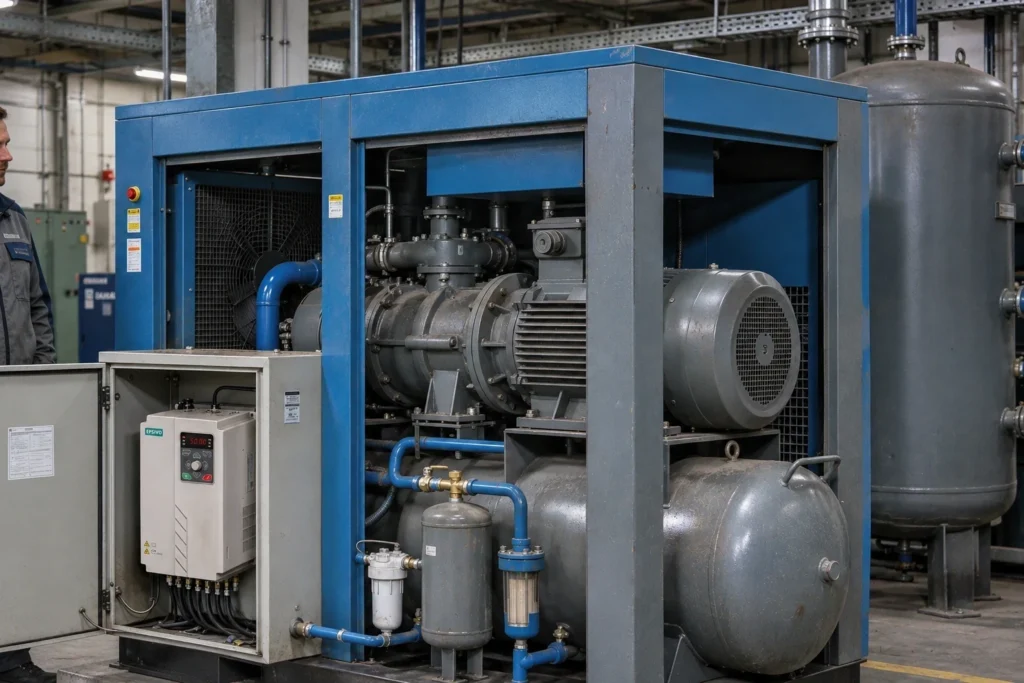
What Is a VFD in a Compressor System?
A vfd compressor drive regulates motor speed across industrial rotary screw, reciprocating, and scroll air compressors by continuously modulating electrical supply frequency. Sitting between the main electrical distribution panel and the compressor motor, it replaces fixed-speed contactors or star-delta starters with infinitely variable shaft speed control.
Unlike fixed-speed compressors that waste up to 40%–70% of full-load power while running idle in unloader mode, a variable frequency drive matches compressor CFM directly to compressed air demand, holding header pressure within a tight ±0.1 bar band.
In compressed air systems, the drive does not replace the compressor air end, separator tank, or air receiver. A factory-built variable speed compressor includes the drive, motor, and air end pre-packaged in a single acoustic enclosure. A standalone vfd compressor drive is the electronic control component itself, allowing industrial operators to retrofit existing fixed-speed machines or OEM compressor builders to integrate high-efficiency vector drives into their equipment.
How Does a VFD Compressor Drive Work?
A compressor drive converts electrical power and modulates output through three synchronized operational stages:

Input AC Rectification:
The three-phase input bridge rectifier converts incoming AC power into DC voltage. This power conversion prepares energy for the bus buffer without fixing motor shaft RPM.
DC Bus Capacitive Filtering:
The DC bus capacitor bank smooths DC ripple and provides a stable energy reserve capable of absorbing sudden pneumatic load transients and mechanical torque spikes.
Inverter PWM Vector Synthesis & Pressure Closed Loop:
High-power IGBTs invert DC back to variable-frequency AC using field-oriented vector control. The processor monitors an analog pressure transmitter on the discharge header; as compressed air tools operate, the drive instantly modulates motor speed to keep header pressure rock-solid.
By maintaining line pressure within ±0.1 bar, a VFD eliminates the broad pressure bands (1.5–2.0 bar) required by conventional load/unload compressors.
Why Use a VFD Compressor Drive? Benefits & Load Tracking
Retrofitting or specifying a variable frequency drive on air compressors delivers superior economic and operational returns:
- Eliminating Costly Idle Unload Losses: Conventional rotary screw compressors switch between loaded and unloaded states. During unload, the motor runs at 100% speed, drawing 40% to 70% power while producing zero air. A VFD slows the motor to match demand directly, eliminating unloaded waste.
- Heavy-Duty Constant Torque (150% Overload) Capability: Compressors represent constant-torque loads where opposing torque remains steady across the entire speed envelope. Epsivo compressor drives deliver 150% rated torque overload for 60 seconds, preventing stalling during cold starts.
- Tightly Controlled Pressure Envelope (±0.1 Bar): Load/unload compressors require wide pressure bands (6.5 to 8.0 bar) to avoid rapid contactor cycling. A VFD stabilizes pressure within ±0.1 bar. Lowering average operating pressure by 1 bar reduces plant electrical consumption by approximately 7%.
- Smooth Acceleration & Mechanical Longevity: Eliminating harsh across-the-line mechanical starts suppresses torsional shock on compressor airend gears, extends bearing longevity, and prevents utility demand penalty spikes.
Can You Add a VFD to an Existing Compressor? Retrofit Criteria
Retrofitting an existing fixed-speed air compressor with a VFD is technically viable, but requires strict engineering verification:
- Minimum Turndown Speed & Oil Lubrication: Rotary screw compressors rely on differential pressure or oil pumps for rotor lubrication. Running below 30 Hz can cause oil starvation; enforce a 30 Hz minimum frequency limit.
- Unloading Valve Sequencing: The drive must start unloaded with the inlet closed, accelerate to speed, and then load air. Starting loaded against line pressure causes overcurrent stall trips.
- Motor Insulation: Verify Class F insulation. For cable runs over 30 meters, install an AC output reactor (dV/dt filter) to protect windings from voltage spikes.
- Auxiliary Integration: Compressor retrofits coordinate with commercial VFD HVAC chillers, water-cooled compressor pumps, and cooling radiator ventilation fans. Single-phase sites can power compressors via a single phase to 3 phase VFD.
Engineering Checklist: How to Select a VFD for a Compressor
Follow this selection checklist to ensure reliable compressor drive pairing:
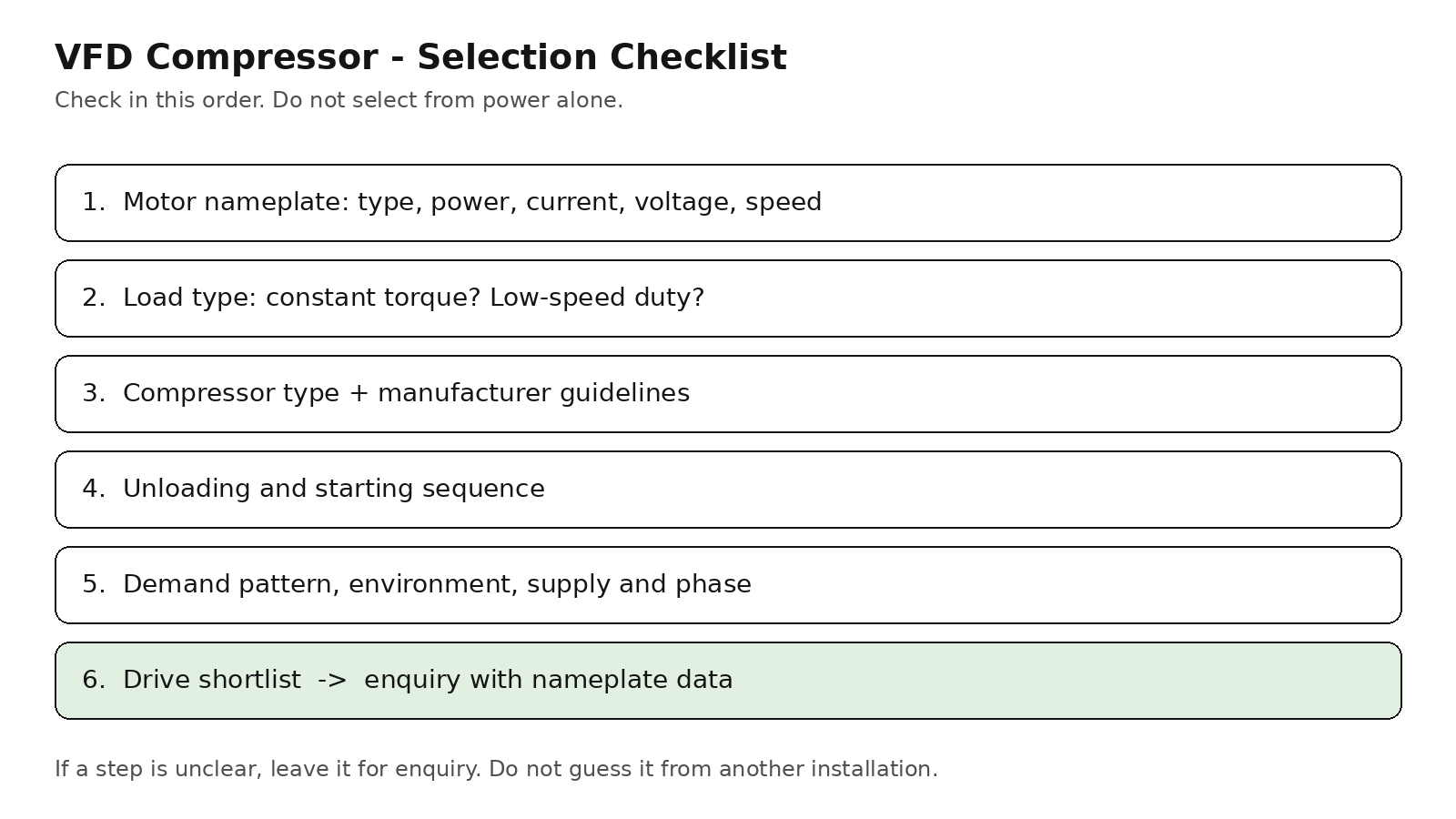
Size Exclusively for Constant Torque (CT) Heavy Duty:
Always select the drive based on its Heavy Duty (HD / CT) current rating, guaranteeing 150% overload capacity for 60 seconds. Match continuous output amps to motor nameplate Full Load Amperage (FLA).
Program Minimum Frequency Floor for Bearing Lubrication:
Set parameter minimum output frequency to at least 30 Hz (or the manufacturer’s specified minimum) to ensure continuous oil circulation and prevent air end overheating.
Mitigate Acceleration Overvoltage Trips:
Air compressors have substantial mechanical inertia. If the drive decelerates too rapidly, regenerator energy pumps into the DC bus, causing overvoltage trips. Program an S-curve ramp and add dynamic braking resistors if fast stopping is required.
Verify Cooling and Enclosure Environment:
Industrial compressor rooms are often hot and oily. Ensure the drive enclosure is rated for the environment (IP20 in sealed cabinets or IP54) and that derating is applied for ambient temperatures above 40°C.
Select Sensorless Vector Control Mode:
Operate the drive in Sensorless Vector Control (SVC) rather than standard V/F mode to provide maximum starting torque and tight speed regulation under sudden air discharge fluctuations.
Never downsize a compressor drive to variable-torque (VT) ratings; compressors require constant-torque (CT) sizing across all horsepower classes.
Epsivo VFD Series for Air Compressors
Epsivo manufactures heavy-duty vector control variable frequency drives engineered specifically for rotary screw, reciprocating, and scroll air compressors:
| Series | Platform | Power Range | Input Voltage | Compressor Duty & Constant-Torque Fit |
|---|---|---|---|---|
 ES210 | Single-Phase Compact VFD | 0.4–2.2 kW | 1-Phase 220 V in, 3-Phase out | Small reciprocating workshops and light-commercial air compressors operating on single-phase utility feeds. |
 ES230 | Compact Multi-Function | 0.4–11 kW | 220–240 V / 380–415 V | Compact industrial rotary screw and piston compressors requiring heavy-duty torque and multi-step pressure control. |
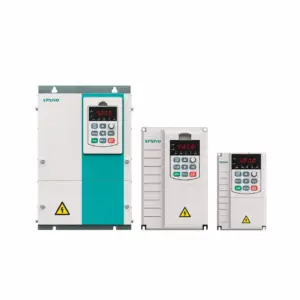 ES300 | Sensorless Vector VFD | 0.75–710 kW | 3-Phase 380–415 V (±15%) | Industry workhorse for rotary screw compressors, vacuum pumps, and heavy manufacturing pneumatic plants (official factory application). |
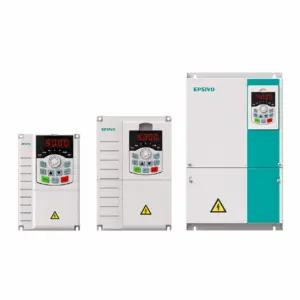 ES500 | High-Performance Vector | 0.75–710 kW | 3-Phase 220–240 V / 380–415 V | High-performance vector drive with adaptive PID, fast dynamic torque response (150% overload for 60s), and closed-loop transducer tracking. |
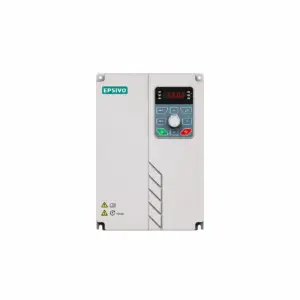 ES530 | Through-Wall Mount VFD | 15–400 kW | 3-Phase 380–415 V (-15%~+10%) | Through-wall mounting isolates heatsink airflow outside compressor electrical cabinets, ideal for compact high-power compressor packages. |
ES300 series officially lists air compressors as an engineered application; ES500 provides high-performance adaptive vector control for demanding industrial air stations.
Frequently Asked Questions About VFD Compressor
What is a VFD in a compressor?
A VFD in a compressor is an electronic motor controller. It rectifies AC utility power to DC, smooths it on the DC bus, and inverts it into variable-frequency AC. Motor speed follows frequency directly, allowing compressed air delivery (CFM) to track plant demand while stabilizing header pressure.
Can a VFD be used on a compressor?
Yes, provided the compressor design, lubrication system, and electric motor allow variable-speed operation. Because air compressors represent constant-torque loads, the drive must be sized for heavy duty (150% overload), and a minimum speed floor (typically 30 Hz) must be enforced for oil lubrication.
Can you put a VFD on a scroll compressor?
Only if the specific scroll compressor model is approved for variable speed by its manufacturer. Scroll compressors rely on tight mechanical clearances and specific orbital oil lubrication paths. Operating outside the approved frequency envelope can lead to internal flank wear.
How do you size a VFD to a compressor?
Size the drive strictly from the motor nameplate Full Load Amperage (FLA) under Constant Torque (CT / Heavy Duty) ratings, not from nominal horsepower alone. Ensure the drive continuous rated current matches or exceeds motor FLA, and confirm at least 150% overload torque for 60 seconds.
Is a VFD good for an air compressor?
A VFD provides exceptional financial returns for air compressors operating under fluctuating demand profiles. It eliminates wasteful unloaded idle power, tightens header pressure, and softens mechanical starting shock. For compressors running continuously at 100% capacity 24/7, payback is lower.
Is a VFD safe for an AC compressor?
A VFD is safe for refrigeration compressors only when applied within the manufacturer’s approved speed, envelope, and pressure ratios. Operating outside rated limits risks crankcase oil foaming, inadequate suction gas cooling, or oil starvation.
What would cause acceleration overvoltage on a VFD-powered compressor?
Acceleration or deceleration overvoltage trips occur when the drive ramps speed faster than mechanical compressor inertia can follow, causing the motor to act as a generator and pump energy back into the DC bus. Lengthening ramp times, configuring S-curve profiles, or adding braking resistors resolves this.
How do you calculate energy savings on a VFD air compressor?
Savings depend on baseline unload hours, demand profile, and local electricity tariffs. Because an unloaded compressor consumes 40%–70% of full-load power while producing zero air, eliminating unload run time and reducing header pressure by 1 bar typically yields 20% to 35% plant energy savings.