
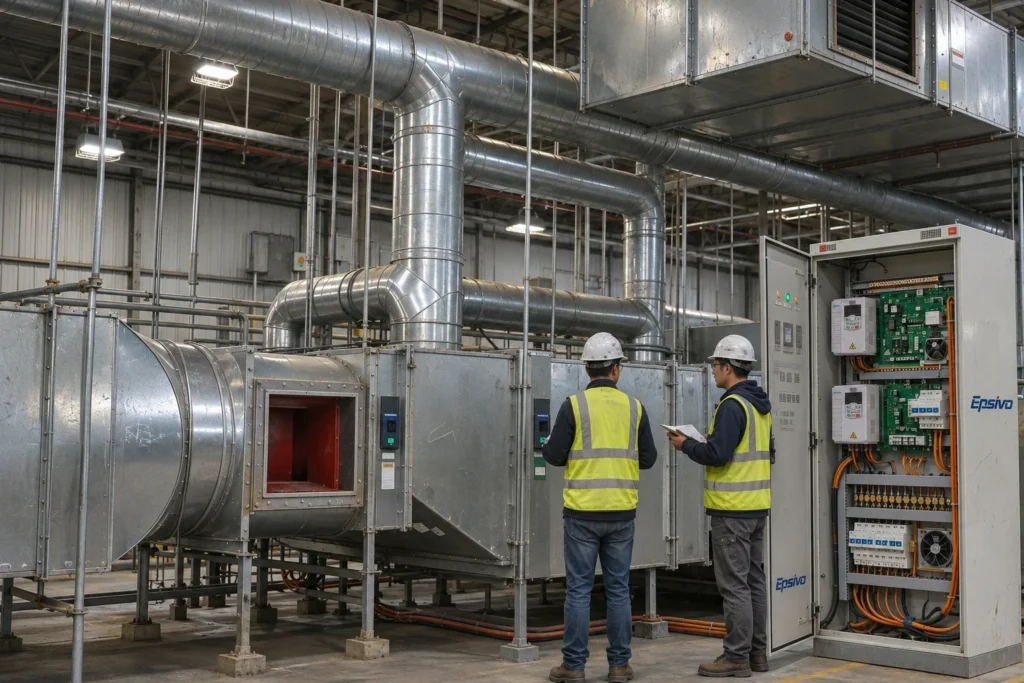
What Is a VFD in HVAC Systems?
A vfd hvac drive regulates AC motor speeds across commercial heating, ventilation, and air conditioning systems by varying electrical frequency and voltage. Installed between the incoming AC line and the motor, an external variable frequency drive (also known as a VSD or inverter) dynamically matches motor output to dynamic thermal loads, drastically slashing energy consumption and mechanical wear.
Because building occupancy and ambient weather fluctuate continuously, running central plant motors at fixed nameplate speed while mechanically choking fluid flow with bypass valves or air dampers wastes immense electricity. Installing an external drive delivers instantaneous demand-based modulation without requiring major equipment overhauls.
An Epsivo VFD is an external electronic drive component; it does not replace the motor, ductwork, pump impeller, or chiller compressor. If a facility currently relies on older motor starters or mechanical dampers, engineering teams do not need to replace their existing mechanical housings. Adding an external vfd hvac controller delivers instantaneous demand-based modulation across air handling units (AHUs), cooling towers, and chillers.
In modern building management architectures, VFDs function as intelligent field actuators. They receive standard 0–10 V, 4–20 mA, or digital bus commands from static pressure, differential temperature, or humidity sensors, translating automated climate algorithms into exact shaft RPM with sub-hertz precision.
How Does a VFD Work in an HVAC System?
A variable frequency drive controls HVAC equipment through three unified power-conversion stages:

Input Rectification and DC Bus Smoothing:
Incoming three-phase AC enters the diode bridge rectifier, converting AC into direct current (DC). This passes into the internal DC bus capacitor bank, which filters ripple and buffers electrical energy.
IGBT Inversion and Closed-Loop Control:
The microprocessor fires Insulated Gate Bipolar Transistors (IGBTs) to synthesize clean PWM AC output at variable frequencies. An onboard PID loop continuously monitors sensor signals to command exact required speed.
The Centrifugal Affinity Laws:
Centrifugal fans and pumps obey the cubic power law: power consumed varies with the cube of motor speed. Reducing speed by 20% drops electrical power draw by approximately 50%, delivering efficiency that mechanical dampers can never match.
Gradual acceleration ramps eliminate sudden electrical inrush current and reduce shock on drive belts, bearings, and duct transitions.
Why Use a VFD in HVAC? Core Engineering Benefits
Operating HVAC motors at variable speed transforms mechanical performance across central plants:
- Drastic Energy Conservation at Partial Load: HVAC systems operate below 80% capacity for over 90% of the year. Modulating motor speed to follow actual real-time thermal load eliminates the tremendous energy penalty of mechanical throttling.
- Controlled Soft Starting & Inrush Suppression: Direct-on-line starting draws inrush currents reaching 600% to 800% FLA. An Epsivo VFD ramps motors smoothly from 0 Hz, capping starting current below 120% FLA, eliminating utility peak penalties and belt slip.
- Tighter Environmental Stability (ΔT & Static Pressure): Modulating pump speed preserves optimal chilled water temperature differentials (ΔT), while modulating supply fans holds strict static duct pressure across variable air volume (VAV) terminal dampers.
- Acoustic Attenuation & Extended Mechanical Life: Slowing fan and pump RPM dramatically reduces aerodynamic duct rumble, eliminates water hammer in hydronic lines, and extends the service life of motor bearings, impellers, and mechanical seals.
Where Is a VFD Used in HVAC? Key Subsystems
Variable frequency drives serve distinct operational functions across central HVAC plant subsystems:
- Air Handling Units (AHU) and Supply/Return Fans: Regulates main supply fans to maintain constant duct static pressure as VAV dampers modulate. For fan curve matching and resonance suppression, review our specialized guide on VFD fan drives.
- Chilled Water and Condenser Water Circulation Pumps: Varies pump impeller speed according to differential pressure across remote cooling coils. For hydronic piping checklists and pump macros, see our comprehensive VFD pump control systems manual.
- Cooling Towers and Evaporative Condensers: Modulating fan speeds based on basin water temperature keeps condenser water at optimal efficiency while minimizing evaporation losses.
- Water Chillers and Screw Compressors: Chiller screw compressors benefit substantially from speed regulation over slide-valve unloading. For heavy-duty compressor retrofits, explore our manual on VFD compressor drives. In facilities where incoming utility is single-phase, commercial motors can be powered via a single phase to 3 phase VFD with bus derating.
Engineering Checklist: How to Select an HVAC VFD
Follow these fundamental engineering principles when sizing and specifying drives for HVAC equipment:
Size Exclusively by Motor Nameplate Full Load Amperage (FLA):
Never select a drive based solely on horsepower or kW ratings. Ensure continuous rated output current meets or exceeds motor nameplate FLA at maximum ambient operating temperature.
Differentiate Load Profiles (Variable Torque vs. Constant Torque):
Centrifugal fans and pumps follow variable torque (VT, 110%–120% overload). Screw compressors and positive-displacement pumps represent constant torque (CT, 150% overload).
Harmonic Mitigation and Input AC Chokes:
Specify drives with built-in DC reactors or install 3%–5% line impedance AC chokes to suppress Total Harmonic Distortion (THD) under IEEE 519 standards.
Three-Contactor Bypass Cabinets for Critical Run Time:
For hospitals, cleanrooms, and data centers, pair drives with a 3-contactor bypass arrangement that automatically transfers the motor to utility power during drive servicing.
Building Management System (BMS) Protocols:
Ensure native support for open protocols such as BACnet MS/TP, Modbus-RTU, and Metasys N2 to remotely monitor run hours, power consumption, and fault alarms.
Always verify motor insulation ratings (Class F or inverter-duty) when retrofitting older HVAC installations.
Epsivo VFD Series for HVAC Applications
Epsivo manufactures engineered variable frequency drives tailored for commercial HVAC, industrial fan arrays, hydronic pumping stations, and chillers:
| Series | Platform | Power Range | Input Voltage | HVAC Suitability & Fit |
|---|---|---|---|---|
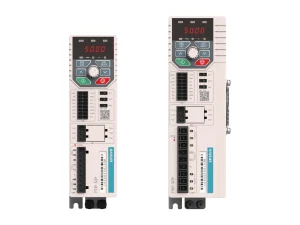 ES210 | Single-Phase Compact VFD | 0.4–2.2 kW | 1-Phase 220 V in, 3-Phase out | Fractional exhaust blowers, booster pumps, and packaged terminal air conditioners on single-phase feeds. |
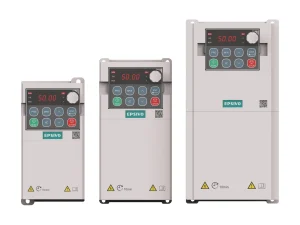 ES230 | Compact Multi-Function | 0.4–11 kW | 220–240 V / 380–415 V | Compact supply fans, chilled water fan coil units (FCU), and packaged rooftop HVAC systems. |
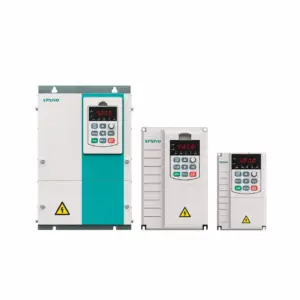 ES300 | Sensorless Vector VFD | 0.75–710 kW | 3-Phase 380–415 V (±15%) | Industry workhorse for commercial AHU supply/return fans, chilled water pumps, and cooling tower installations. |
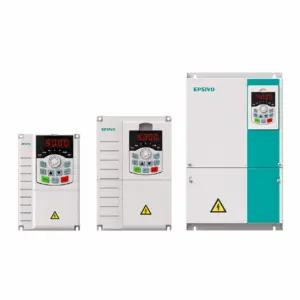 ES500 | High-Performance Vector | 0.75–710 kW | 3-Phase 220–240 V / 380–415 V | High dynamic accuracy with adaptive PID regulation, multi-transducer inputs, and cleanroom/data center staging. |
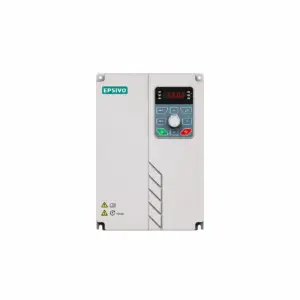 ES530 | Through-Wall Mount VFD | 15–400 kW | 3-Phase 380–415 V (-15%~+10%) | Through-wall mounting vents drive heatsink thermal loads outside densely packed HVAC mechanical rooms. |
All Epsivo HVAC drives incorporate conformal coated circuit boards (IEC 60721-3-3 3C2 standard) to resist ambient humidity in mechanical rooms.
Frequently Asked Questions About VFD HVAC
What does VFD stand for in HVAC?
VFD stands for Variable Frequency Drive. A VFD HVAC drive controls an AC motor by changing electrical frequency and voltage. In commercial HVAC, it modulates fans, pumps, and compressors to track dynamic thermal loads.
What are the differences between VFD and VAV systems?
A VFD HVAC drive controls motor speed at central equipment. A VAV (Variable Air Volume) system distributes air into individual zones using dampers. They operate together: the VFD modulates AHU fan speed to hold duct pressure steady as zone VAV boxes modulate.
What are the three primary types of VFDs?
The three common VFD topologies are Voltage Source Inverter (VSI), Current Source Inverter (CSI), and Pulse Width Modulation (PWM) drives. In modern HVAC, PWM voltage source drives with IGBT output bridges are standard due to high power factor and precise low-speed control.
What is the difference between a VFD, VSD, PLC, and inverter?
A VSD (Variable Speed Drive) is the broad term for any motor speed controller. A VFD is a type of VSD for AC motors. A PLC is a controller that calculates automation logic but cannot power a motor directly. An inverter is the specific electronic stage inside a VFD that converts DC voltage back into variable AC.
How does a VFD work in an AHU or chiller system?
In an AHU, the drive monitors duct static pressure and modulates fan RPM to maintain a steady setpoint. In a chiller plant, drives regulate condenser and chilled water pumps based on differential pressure or temperature, eliminating wasteful bypass flow.
Why is a VFD used in an AHU, and can it be used on a compressor?
A drive is used in an AHU because airflow demand fluctuates with occupancy; running fixed-speed fans against throttled dampers wastes massive power. A VFD can also control compressors provided the motor is constant-torque rated and a minimum speed floor (typically 30 Hz) is set to ensure lubrication.